


Table of Contents
Learning **how to choose jaw crusher** is essential for your project success. With the development of technology and the growing global demand for construction and mining, jaw crushers have become one of the most essential crushing equipment.
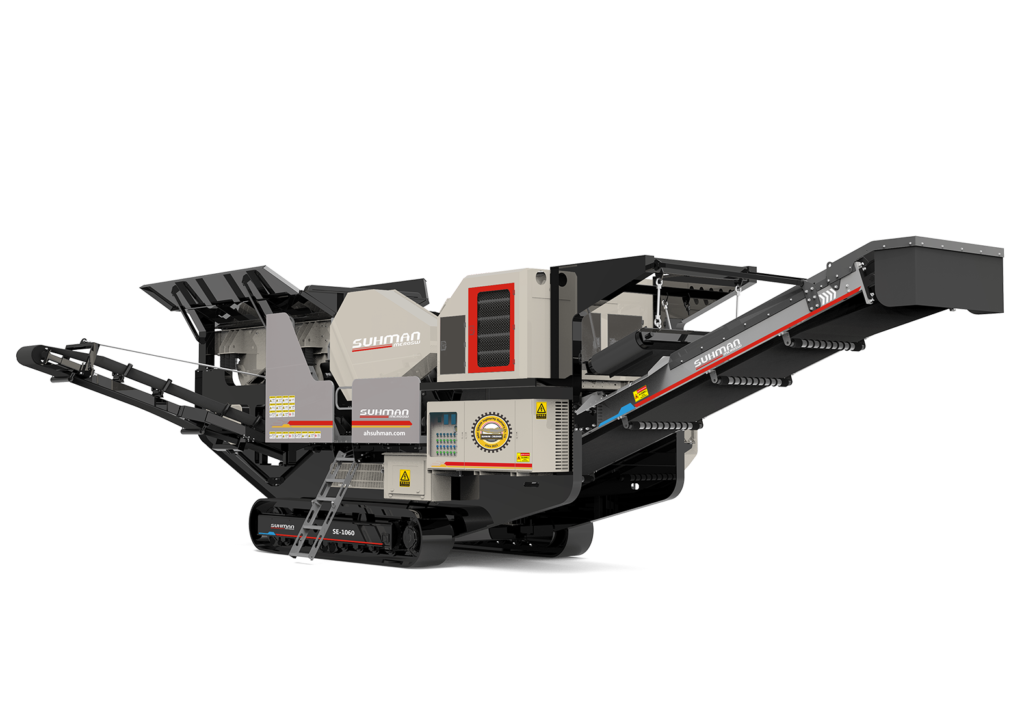
1. User Self-Positioning: Clarify Your Project Needs First
Before choosing a jaw crusher, you need to confirm the following key points clearly—this is the foundation of correct selection and helps avoid unnecessary costs.
(1)What Raw Materials Need to Be Crushed?
Jaw crushers are suitable for crushing various materials with a compressive strength not exceeding 320MPa, mainly used for the primary crushing of hard rocks and construction solid waste. Common materials include:
- Granite
- Limestone
- Basalt
- Diabase
- Construction solid waste
Note: For materials with higher hardness, you need to choose a heavy-duty jaw crusher to ensure durability and production efficiency.
(2)Total Quantity and Size of Raw Materials
Two key points to confirm: the total tonnage of raw materials and the maximum size of a single raw material. The maximum size of raw materials directly determines the model of the jaw crusher—feeding materials larger than the feed opening will cause jamming and machine shutdown.
(3)Finished Product Specifications
Based on the above "User Self-Positioning" and "Basic Introduction to Jaw Crushers", you can initially determine the suitable model for your project. Remember these simple tips for how to choose jaw crusher:
- Single finished product: 15-20mm
- Two types of finished products: 10-15mm and 16-25mm
This determines whether you only need a single jaw crusher or a complete crushing line with supporting equipment.
(4)Production Capacity Calculation
Calculate the required hourly capacity based on the total raw material quantity and project timeline. Here’s a practical example:
If you have 100,000 tons of granite and need to complete crushing within 6 months, working 25 days a month and 10 hours a day, the required hourly capacity is: 100,000 ÷ 6 ÷ 25 ÷ 10 ≈ 67 tons/hour. This helps you choose a jaw crusher with the right capacity.
(5)Supporting Equipment on Site
To control costs and improve efficiency, confirm whether you need to use the following supporting equipment with the jaw crusher:
- Vibrating feeder (for uniform feeding)
- Belt conveyor (for material transportation)
- Cone crusher/impact crusher (for secondary crushing)
- Vibrating screen (for classifying finished products)
(6)Power Source: Electricity or Diesel?
Choose the power source based on local electricity and diesel costs, as well as on-site conditions. Jaw crushers can be powered by external electricity or diesel engines—diesel-powered models are more suitable for sites without stable power supply.
(7)Mobile or Stationary Jaw Crusher?
Select based on the concentration of your crushing project:
- Large mines or quarries (fixed projects): Choose a stationary jaw crusher (stable and high-capacity).
- Small and medium-sized projects or scattered construction sites: Choose a mobile jaw crusher (low installation and relocation costs, flexible movement).
Small and medium-sized projects or scattered construction sites: Choose a mobile jaw crusher (low installation and relocation costs, flexible movement).
(8)Approximate Budget
Confirm your budget for purchasing the jaw crusher, and consult the factory sales staff about the wear and tear of wearing parts (such as jaw plates) during use—this helps you calculate long-term operating costs.
2. Basic Introduction to Jaw Crushers
Understanding the basic knowledge of jaw crushers will help you make a more accurate selection.
(1)Classification of Jaw Crushers
Jaw crushers are generally divided into stationary and mobile types. As mentioned earlier, you can determine the type based on your project needs and on-site conditions.
(2)Raw Material Size Determines the Jaw Crusher Model
Most manufacturers include the feed opening size in the jaw crusher model. Feeding materials larger than the feed opening will cause jamming, so confirming the maximum feed size is the first step in selection.
Common jaw crusher naming conventions (global mainstream brands):
- Ordinary jaw crusher: PE 1060×750mm (feed opening 1060×750mm, maximum feed size ≤ 85% of the feed opening width).
- Sandvik CJ412: Feed opening 1200×830mm, maximum feed size ≤ 1200mm.[Sandvik]
- Metso C130: Feed opening 1300×1000mm, maximum feed size ≤ 1300mm.[Metso]
(3)Jaw Crusher Capacity Selection
Match the capacity with the feed opening size:
- Low capacity (≤50 t/h): Choose feed opening 250×400mm or 400×600mm.
- Medium capacity (50–160 t/h): Choose feed opening 500×750mm or 600×900mm.
- High capacity (≥200 t/h): Choose feed opening 1060×750mm or 1300×1000mm.
(4)Discharge Size Range of Jaw Crushers
The global general discharge range of jaw crushers is 10–350mm, while the discharge range of SUHMAN jaw crushers is 40–220mm (adjustable). The output size is mixed, with the middle size accounting for the largest proportion (like a downward-opening parabola).
Note: As a primary crushing equipment, if you need a specific discharge size range, you need to add secondary crushing equipment (such as cone crusher) and vibrating screen, or directly add a vibrating screen after the jaw crusher to meet production requirements.
3. Confirm the Right Jaw Crusher Model
Based on the above "User Self-Positioning" and "Basic Introduction to Jaw Crushers", you can initially determine the suitable model for your project. To make selection easier, remember these simple tips:
- Raw material type → Crusher structure
- Raw material size → Jaw crusher model
- Finished product specifications → Single jaw crusher or complete crushing line
- Production capacity → Small/medium/large capacity machine
- Raw material distribution → Stationary/mobile crusher
- On-site conditions → Electric/diesel/hybrid power
4. Summary
By clarifying your project needs (raw material, feed size, capacity, finished product, etc.), you can quickly select the right jaw crusher. This guide on how to choose jaw crusher helps you make the right decision.
We hope this guide is helpful for your jaw crusher selection. If you have any questions, feel free to leave a comment below or contact us.
---
## 📩 Looking for Jaw Crusher?
Contact SUHMAN for the best jaw crusher for sale price!
📱 **WhatsApp:** +86 13856971828
📧 **Email:** xandrahuang197@gmail.com
⏰ **24-Hour Response**
**Related Products:**
- [Mobile Jaw Crusher]
- [Mobile Cone Crusher]